Waking Up in 700 BC Was Not Gentle
There were no alarms in 700 BC.
No soft sounds. No snooze buttons. No warm beds waiting to cradle you a few more minutes.
People woke when the world told them to. Cold air. Animals stirring. Smoke from last night’s fire still clinging to clothes and hair. The day began at sunrise whether you were ready or not.
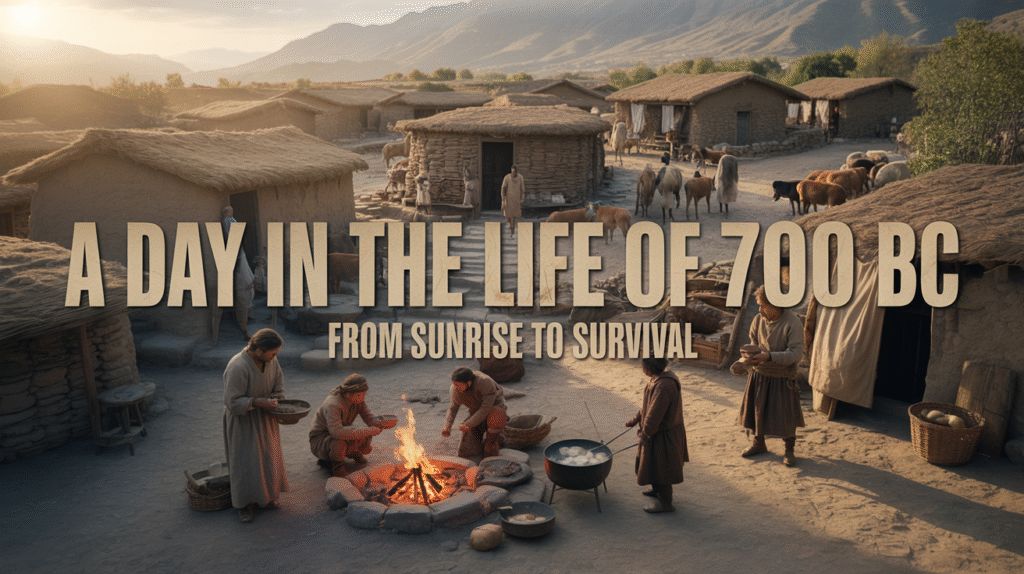
Most homes were small, dark, and crowded. Dirt floors. Stone or mud walls. A single room for sleeping, eating, and shelter. Privacy didn’t exist. Silence didn’t last long.
If you lived in a village, you woke to movement. Footsteps. Livestock. Children already stirring because sleep wasn’t something you wasted when daylight mattered.
This way of life traces back to the earliest settlements humanity ever built, much like those described in the first cities emerge in Mesopotamia. By 700 BC, survival routines were already thousands of years old — and they hadn’t gotten easier.
Every morning carried the same unspoken truth.
If you didn’t work today, you didn’t eat tomorrow.
Breakfast Was About Survival, Not Comfort
Breakfast in 700 BC would disappoint anyone used to modern life.
No sugar. No coffee. No bread fresh from a store.
Most mornings started with simple grains, watered-down porridge, or leftover flatbread if there was any. Food wasn’t designed to taste good. It was designed to keep you alive long enough to work.
Water was precious. Clean water even more so. People drank carefully, knowing sickness could follow even the smallest mistake.
There was no refrigeration. No preservatives. Food spoiled fast. What you ate depended entirely on the season and the previous harvest.
This constant concern for food storage and spoilage mirrors struggles seen much later in history, like those explored in how people kept food cold before refrigerators.
In 700 BC, hunger wasn’t a feeling.
It was a threat that followed you all day.
Work Began at Sunrise and Rarely Stopped
By the time the sun cleared the horizon, work was already underway.
There were no jobs in the modern sense. No schedules. No weekends. Everyone worked because everyone had to.
Farming dominated life. Fields were plowed by hand. Tools were heavy, crude, and unforgiving. One mistake could mean injury or death — and there was no doctor waiting nearby.
Others worked as builders, metalworkers, potters, or shepherds. Every role supported survival. Nothing was wasted. Nothing was optional.
This relentless labor cycle has echoes throughout history, even into much later eras, as seen in pieces like the brutal truth about laundry in the early 1900s. Technology changes, but human effort remains constant.
In 700 BC, exhaustion wasn’t a sign to stop.
It was proof you were doing what you had to do.

Children Grew Up Fast in 700 BC
Childhood, as we understand it, did not exist.
By the time a child could walk, they were expected to contribute. Fetching water. Tending animals. Helping in the fields. Watching younger siblings.
Education came through observation and repetition, not schools or books. Skills were learned early because survival depended on it.
Many children never reached adulthood. Disease, accidents, and hunger claimed lives regularly. Those who survived learned quickly that weakness had consequences.
This harsh reality is echoed in later historical snapshots of childhood responsibility, like life of schoolchildren in the Lower East Side in the 1800s, where children were still expected to grow up faster than we’d allow today.
In 700 BC, innocence was a luxury few could afford.
Clothing Was Heavy, Handmade, and Never Replaced
In 700 BC, clothing was not about style. It was about protection.
Most people owned only a few garments. Wool, linen, or rough plant fibers were spun and woven by hand, often by family members. Clothes were patched, repaired, and reused until they physically fell apart.
Nothing fit perfectly. Nothing was soft by modern standards. Fabric scratched, trapped heat in summer, and barely blocked cold in winter.
Footwear was minimal. Many people walked barefoot, even while working fields or handling animals. Those with shoes owned simple leather sandals that wore down quickly.
The effort behind basic clothing helps explain why everyday tasks dominated life for centuries, a reality that still echoes in later eras like those described in the women who kept 1800s households running.
In 700 BC, what you wore was what you had. There was no replacement coming.
Injury and Illness Were Constant Threats
Every task carried risk.
A cut from a tool. A fall in the fields. A fever that would not break. Even minor injuries could become fatal without treatment.
There were no antibiotics. No understanding of germs. No emergency care. Healing depended on luck, rest, and rudimentary remedies passed down through generations.
If someone became too sick to work, the entire household suffered. Food production slowed. Resources stretched thin. Survival became uncertain.
This ever-present danger shaped behavior. People worked carefully but relentlessly. Fear was normal. Pain was expected.
The same vulnerability appears again and again across history, even much later, as shown in accounts like ancient battle wounds and a remarkable tale of resilience.
In 700 BC, survival often came down to endurance.

Community Was the Only Safety Net
There were no governments stepping in to help. No social programs. No backup plans.
If your village failed, you failed.
Communities shared labor, food, and protection because isolation meant death. Neighbors worked fields together. Families relied on one another during illness or famine.
Disputes were settled locally. Justice was personal. Reputation mattered because trust kept everyone alive.
This tight-knit structure mirrors later small-community dependence, something still visible in snapshots like growing up in 1950s small-town America.
In 700 BC, belonging was not emotional.
It was survival.

Food Preparation Took Most of the Day
Eating was not a break from work. It was part of it.
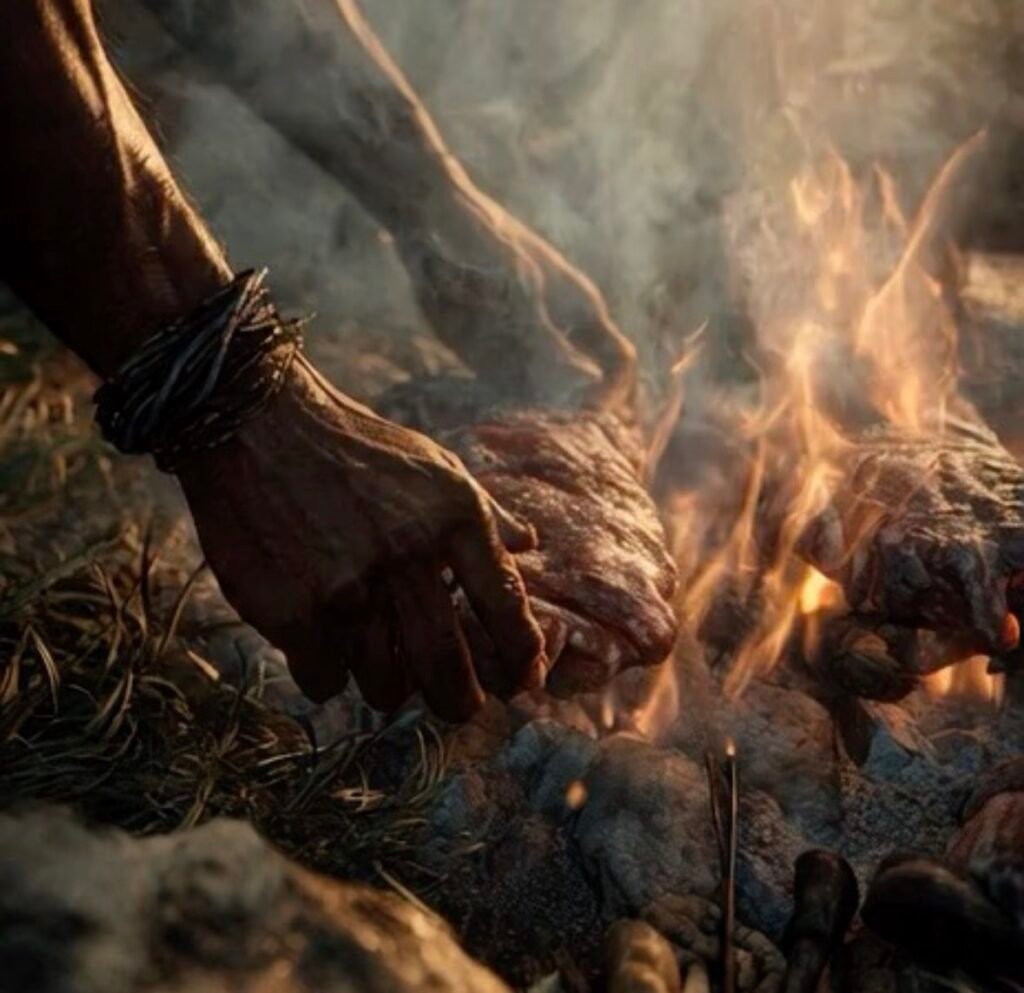
Grain had to be ground by hand. Vegetables cleaned and prepared. Meat, when available, carefully preserved. Fires tended constantly.
Meals were simple and repetitive. What you ate depended on what the land gave you and what you could protect from spoilage.
Nothing was wasted. Bones became tools. Scraps fed animals. Leftovers were reused whenever possible.
This relentless food preparation shaped daily schedules and limited free time, a pattern that would continue for centuries, even into periods described in great depression food and what families ate to survive.
In 700 BC, food ruled the clock.
Nightfall Changed Everything in 700 BC
When the sun went down in 700 BC, the world became dangerous.
There were no streetlights. No lamps glowing in windows across town. Darkness was total, broken only by firelight and the moon.
Night meant cold, uncertainty, and fear. Wild animals roamed freely. Strangers were not welcome. Most people stayed close to home once daylight faded.
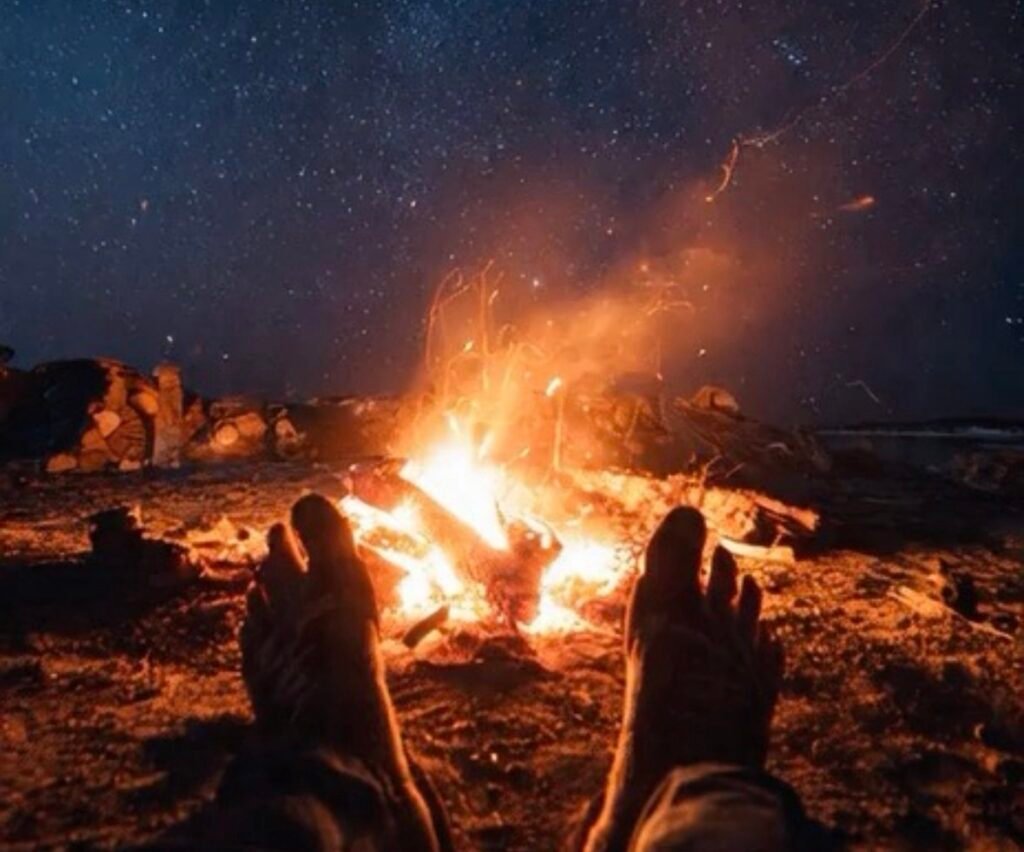
Homes filled with smoke from fires used for warmth and cooking. Families gathered together, not for entertainment, but for safety. The day’s work was discussed. Plans were made for tomorrow. Stories were shared, often passed down orally for generations.
This tradition of storytelling at night helped preserve history long before books were common, much like how early societies recorded memory through spoken word, a pattern that continued until formal writing systems emerged, as seen in the first writing systems appear in Mesopotamia, Egypt, and the Indus Valley.
In 700 BC, night was not relaxing.
It was endured.
Sleep Was Light and Never Guaranteed
Sleep in 700 BC was nothing like modern rest.
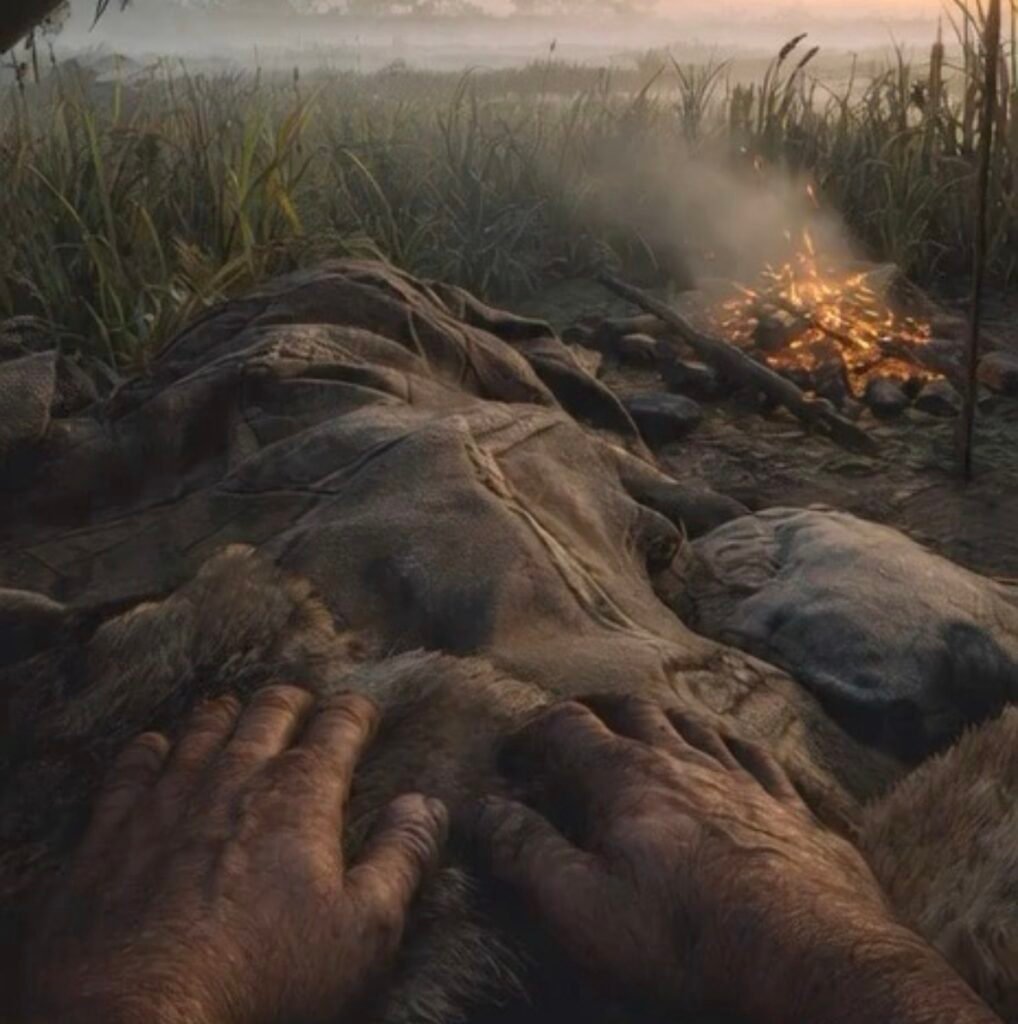
People slept on simple mats, straw, or animal skins. Homes were loud, crowded, and cold. Insects were constant. Fires burned low but never fully out.
Most people slept lightly, waking often. Mothers listened for children. Men listened for danger. Everyone listened for animals.
There was no concept of uninterrupted rest. Sleep happened in fragments, shaped by fear and necessity.
This constant alertness shaped human behavior for centuries and explains why rest has always been viewed differently across eras, even into more recent times like those explored in why people rarely smiled in old photos.
In 700 BC, rest was a pause, not a reset.
A Single Bad Day Could End Everything
There were no second chances.
A failed harvest. A broken tool. A serious injury. A sudden illness. Any one of these could destroy an entire household.
Life in 700 BC balanced constantly on the edge of collapse. Success meant survival. Failure meant disappearance.
There were no records kept for most people. No gravestones. No written legacy. Entire lives passed without leaving a trace behind.
This fragile existence makes ancient daily life feel distant, but it also connects directly to countless forgotten individuals across history, much like those remembered only through fleeting images in articles such as just a boy, his banjo, and his best friend.
In 700 BC, survival was the only achievement that mattered.

Why Most People Today Would Not Survive 700 BC
It’s tempting to romanticize ancient life.
Simple living. Close communities. Life without technology.
But the truth is harsh.
Most people today would struggle within hours. Hunger, cold, exhaustion, and fear would take over quickly. Modern life has removed dangers that once defined every single day.
A day in the life of 700 BC was not peaceful or slow. It was relentless. Every sunrise demanded effort. Every night carried risk.
And yet, humanity survived.
People adapted. They worked together. They endured conditions that would break most of us today. Their resilience built the foundation for everything that came after.
Understanding that reality gives context to modern comfort and reminds us how far we’ve come — and how fragile survival once was.
As an Amazon Associate we earn from qualifying purchases through some links in our articles.